Insert Stuff Here
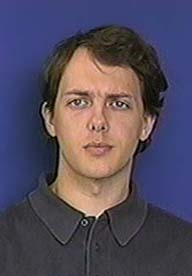
Welcome to the home page of Douglas Burke. I am an Astrophysicist at the Chandra X-ray Center, a part of the Smithsonian Astrophysical Observatory at the Center for Astrophysics | Harvard & Smithsonian.
- Office: B-440, although I haven't seen it for a while.
- Work: (617) 496 7853
- Fax: (617) 495 7356
- Email: dburke at cfa.harvard.edu
-
Work address:60 Garden Street, MS-2Cambridge, MA 02138, USA.
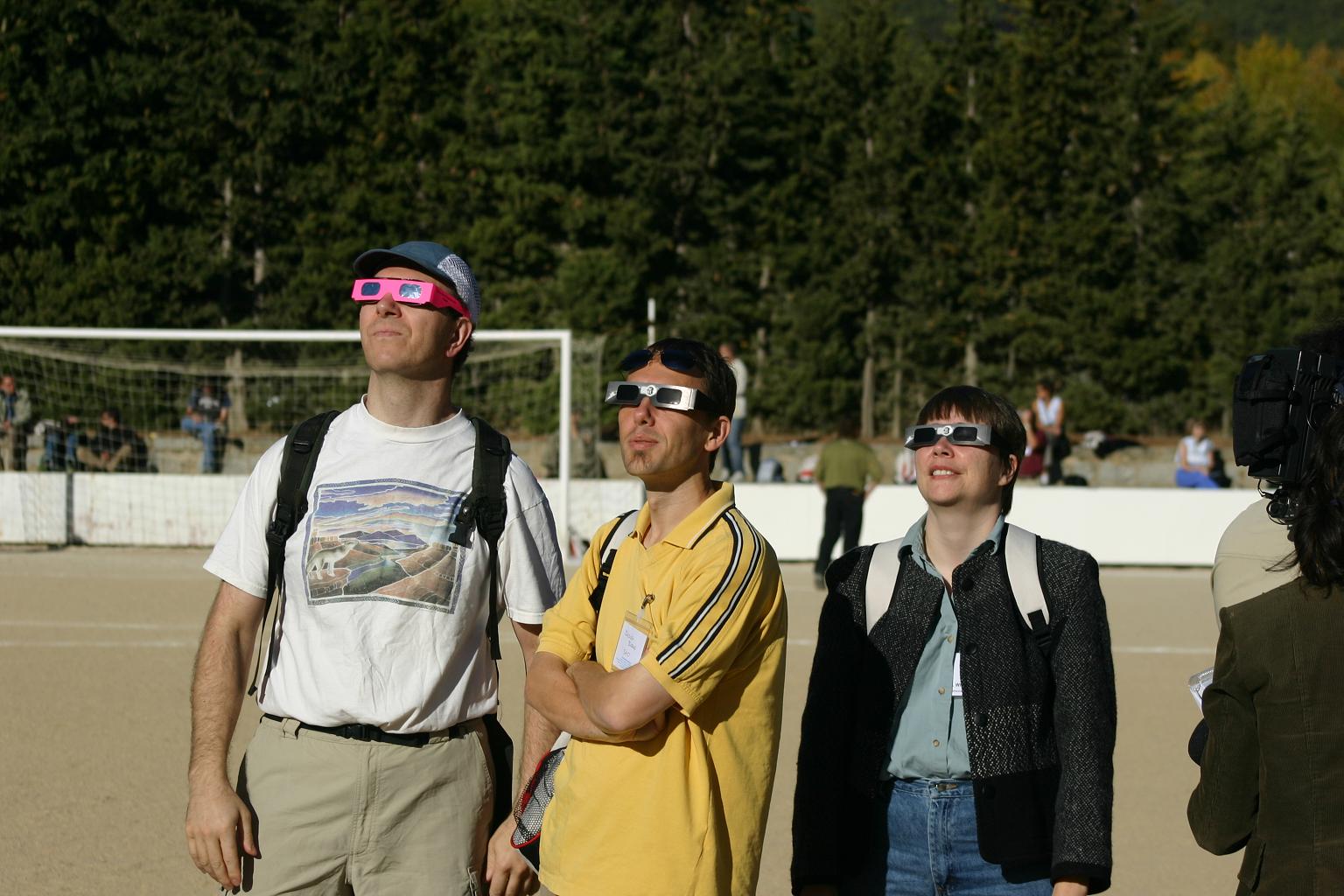
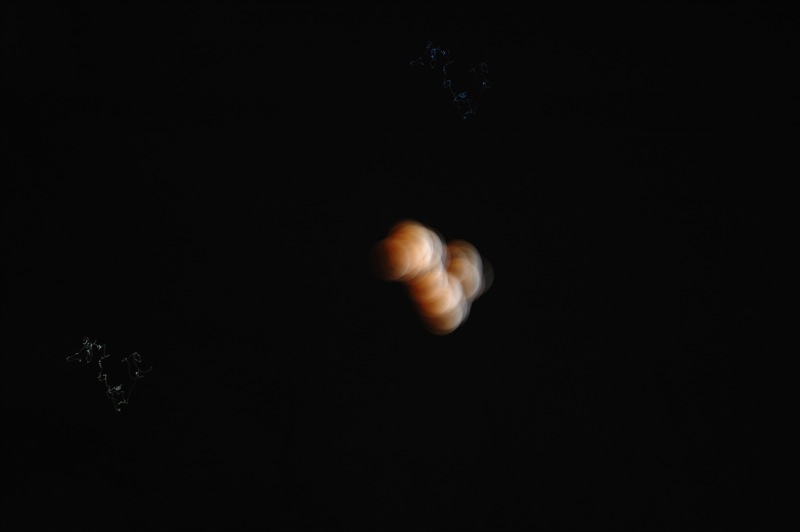
- For a reasonably bad photo, try - from my "Hawaiian days" - this gem. There's also, thanks to Adam Dobrzycki, a more astronomer-friendly version, and an example of how to play pool in Rick's bar, Aspen. I also have an utterly awesome photo of the Lunar eclipse of February 20 2008, which goes to show that you shouldn't get an Astronomer to take a picture of a celestial event.
Thigs I am currently involved in
I am the 2022/23 secretary of the Astrostatistics Interest Group of the American Statistical Association. It doesn't cost anyting to join (other than filling a few forms), so please do join us and enhance the co-mingling of Astronomers and Statisticians!
As part of my work for the Chandra X-ray Center, I am a member of the High Energy Astrophysics Codes, Interface, and Tools Working Group, also known as HEACIT. Please let me know if you want to know more about this group, or have ideas, questions, or concerns about your favorite X-ray analysis system1.
1 - it's okay to admit it's CIAO ;-)
Notebooks & presentations
Here's a collection of notebooks and presentations. The information presented should be considered to be in the public domain unless explicitly noted otherwise.
Haskell
This is a set of notebooks playing around with simple cosmology-related calculations as an excuse to try out IHaskell.
- Angular Diameter Distance
- This time with units
- K corrections with a dimensional twist
- a FITSfull of ARF
Sherpa
Hmmm. Things appear to have broken over time. I shall need to investigate...
These are ipython notebooks showing off Sherpa (and other parts of CIAO):
-
A simple sherpa fit, showing how to use the standalone version of Sherpa.
-
A set of examples, available on GitHub, showing off the standalone version of Sherpa, but the code can also be used in the CIAO version:
-
Writing your own user model, in this case fitting the CDF with a Gamma distribution.
May 26, 2015
-
Writing an "integrated" user model, which uses the data from the previous notebook but fits the histogram of the data with the PDF of a Gamma distribution, which requires handling "integrated" data sets (i.e. those with a lower and upper edge for each bin of the independent axis).
June 4, 2015
-
Plotting using the "low-level" interface, which shows how plots can be made when using the direct, object, interface (rather than the
sherpa.astro.uiorsherpa.uimodules).June 5, 2015
-
Extending existing models (and an example of using XSPEC models), which shows how to write a user model that extends the behavior of an existing model (in this case, subtracting a model from itself with different parameter values). It also shows how to build the XSPEC module, and so use the XSPEC models from standalone Sherpa.
June 16, 2015
-
Simulating 2D data with a dash of error analysis, which uses the object API to simulate a 2D model (i.e. an image), fit it, and calculate errors on the parameters. This can be thought of as an extension of the previous notebooks that show how to replicate the functionality of the high-level UI layer using the object API (it also marks the start of me using the term "object API" for what I previously referred to as the "low-level API").
June 19, 2015
-
Simulating and fitting a 2D image (this time with a Bayesian approach), which is based on the previous notebook, this time showing how you can use the Monte Carlo Markov Chain (MCMC) analysis module in Sherpa (that is, the Bayesian Low-Count X-ray Spectral (pyBLoCXS) module). This notebook is mainly intended to show how to do this, rather than explain why (or the differences between the various frequentist and Bayesian methods for coming up with an error estimate).
June 22, 2015
-
- Trying out Sherpa and ChIPS, which incorporates much of what I learnt in:
Astronomy & Python
Various talks advertising Python to Astronomers:
- A quick - and highly biased - tour of Python for X-ray Astronomy presented at the COSPAR Capacity Building Workshop, 'Advanced School on X-ray', Ensenada, Mexico, November 2014
- What is Python?, part of a series of presentations based on the Practical Python for Astronomers course which we repurposed for the SAO REU Summer Intern program.
Scientific stuff
I am interested in using clusters of galaxies to elucidate the evolution of
structure in the Universe. Or some-such high-fallutin one-line
research description. A more accurate view of my research interests - which also
cover galaxy evolution and studies of the major baryonic components
in the Universe -
can be found by perusing my ORCID profile
 https://orcid.org/0000-0003-4428-7835
or see what
“impact”
https://orcid.org/0000-0003-4428-7835
or see what
“impact”
 my research has made.
I thought-up, designed, wrote, and maintain the What is Chandra doing? site, which shows what Chandra is observing now, as well as allowing you to look at past observations, and how they are related. I am particularly fond of some of the visualizations in the Explore page, such as the correlation between the proposal area (e.g. Galaxy Clusters) and the types of objects that are observed. If nothing else, it shows: how nebulous some of our concepts are; how Astronomers are not taught to think of archival purposes when setting up observations (e.g. the choice of the target name field); and how hard it is to extract useful meaning from the data.
There is also my Southern SHARC survey page, which provides machine-readable (ASCII format) versions of the data in Burke et al. 2003, "The Southern SHARC Catalogue: a ROSAT survey for distant galaxy clusters".
Scientific Software
I use the CIAO
software package, so you should too. I released, in May
2010, the download_chandra_obsid
script that simplifies downloading public datasets from the
Chandra Data Archive; this is now available as part of the
CIAO contributed software
package so you should already have it.
I am one of the developers of the Sherpa modelling and fitting package, which is used in CIAO but can be installed separately (e.g. with conda or from PyPI). Please read the documentation, see the latest release on Zenodo, or join in the development-fun on GitHub.
If you are looking for doing spectral deprojection with Sherpa then you're in the right place. I have recently taken over the deproject package, which you can read about, install from PyPI, or look through the code on GitHub.
An even-more-recent development is my co-maintainership of the PyDS9 Python package for communicating with the SAOImage DS9 imaging application. Unfortunately health reasons have made me pause this particular commitment.
Semantic Astronomy
Recently - for a very vague definition of the term - some of my time has been spent on projects related to the Virtual Observatory, in particular how semantic-web technologies can be used to improve the use of the data that is now available to us (and that is changing the way we do science if you believe Wired). There is a report now available on my study of faceted browsing and its application to Astronomical searches in the VO era. A simple demo (using the Exhibit framework) shows a facet-based view of the Chandra Short-Term schedule. This work has lead me to collaborate with the SAO/NASA Astrophysics Data System Digital Library on using semantics and enhanced search techniques as part of its nascent ADS Labs effort.
For more information on Semantic Astronomy and AstroInformatics, see the Practical AstroInformatics web site, in particular its conferences and workshops page. I was on the organizing committee for the Practical Semantic Astronomy Workshop 2009, on the Programme Committee for the Web Semantics in Action: Web 3.0 in e-Science workshop at the 5th IEEE International Conference on e-Science, which was in Oxford, UK (December 9-11, 2009), and an organizer of the Practical Astroinformatics: An Emerging Discipline special session at the 115th AAS meeting in Washington, DC (January 3-7, 2010). I have served on the Program Committee for the NASA Conference on Intelligent Data Undertanding (CIDU), which doesn't seem to have a nice home page to link to!
Press releases and news items
- Galaxy Gathering Brings Warmth, Chandra X-ray Observatory, December 17, 2019
- 3C186: Precocious Galaxy Cluster Identified by Chandra, Chandra X-ray Observatory, October 26, 2010
- Largest Ever Survey Of Very Distant Galaxy Clusters Completed, Science Daily, July 3, 2009
- Most Massive Galaxies have Surprisingly Diverse Origins, Gemini Observatory, May 14, 2007
- Missing Mass Exists As Warm Intergalactic Fog, CfA 03-06, February 19, 2003
- Scientists ID intergalactic cold front, Honolulu Star-Bulletin, March 2 2000.
- Cosmic Pressure Fronts Mapped by Chandra, CXC PR: 00-08, March 1 2000.
- Chandra telescope's first light, Honolulu Star-Bulletin, August 26 1999.
Scientific stuff (moribund)
This section is for projects which are now out of date, or unmaintained, or perpetually on the back burner.
I tried an experiment in "live-blogging" some Chandra data analysis, in honor of Open-Access Week (#OAWeek). Unfortunately the CIAO release came along and stopped this in its track; I hope to get back to this in 2013. Which I obviously failed at ...
I created the AstroMOAT server to investigate whether "semantic tagging" can be coupled to the work done to create Astronomical vocabularies.
I ran the Chandra Twitter feed; more information can be found from it's home page, although it is very out of date, since the feed has been taken over by the Chandra Public Outreach group. I also created a timeline of Chandra discoveries and events which uses the SIMILE Timeline widget, but this has not been updated for a long time.
Obligatory geek stuff
A recent-ish bout of procrastination has created the Haskell Vega-Lite package hvega which lets you create the JSON you feed to a Vega-Lite viewer. The tutorial even uses Astronomy data.
I maintain the Swish semantic-web toolkit package for Haskell. You can get to the repository and bug tracker on the GitLab site, or read about it in the May 2011 Haskell Communities and Activities Report.
No-longer active projects
I used PDL - an "IDL-like" set of packages for perl - to do some of my scientific stuff. I wrote the support for "bad-values" (i.e. PDL::BadValues and PDL::Bad) in PDL, as well as provided bug-fixes and updates to the whole module (I no longer use PDL so this is mainly a historical note, and it took a lot of time and effort to develop and implement and I am quite proud of the results). If you are interested in PDL, or wonder what it can do for you, then have a look at some success stories or read about PDL, Perl 5, and Perl 6 in Perl 6 Now: The Core Ideas Illustrated With Perl 5.
See my perl pages for some useful astronomy-related software for perl (these packages are feeling a bit neglected, so if you want to take over maintaining any of them please contact me):
-
Astro::Cosmology, a PDL package that makes calculating cosmological distances, volumes, and times a doddle.
The last update of this page was: 23 November 2012.
-
Inline::SLang, which allows you to include and use S-Lang code in your perl programs. This may be of interest to Perl-minded astronomers who use CIAO 3. Note that version 1.00 of the module was released on January 4 2005.
The last update of this page was: 23 March 2009.
If you are interested in an editor for XML, in particular for text-orientated formats such as DocBook, then you could look at the Conglomerate editor, as I provided some bug fixes and feature enhancements to the display widgets, but I believe it is long defunct.
Twitter and the AAS
I've given up on the Twitter analsysis of AAS meetings, but let me know if you want any suggestions, tips, or tricks.
I had a "hobby" of analysing the Twitter feed from AAS meetings. Here's the current list:
- #AAS225, Seattle, January 2015;
- #AAS223, Washington DC, January 2014;
- (not an AAS meeting, but astronomy-related) the JWST@SXSW tweets as the James Webb Space Telescope struts its stuff at SXSW;
- #AAS221, Long Beach, January 6 to 10, 2013;
- AAS220 was missed thanks to the hard drive on my laptop going on permanent vacation;
- #AAS219, Austin, January 8 to 12, 2012;
- #AAS218, Boston, 2011;
- and #AAS215, Washington DC, 2010.